
After a decade in blogging and digital marketing, one thing has stayed constant—your website is your strongest digital asset. Although trends evolve, tools change, but the fundamentals of a great website remain rooted in clarity, user experience, and purpose. In 2026, building an ideal website is less about complexity and more about smart execution.
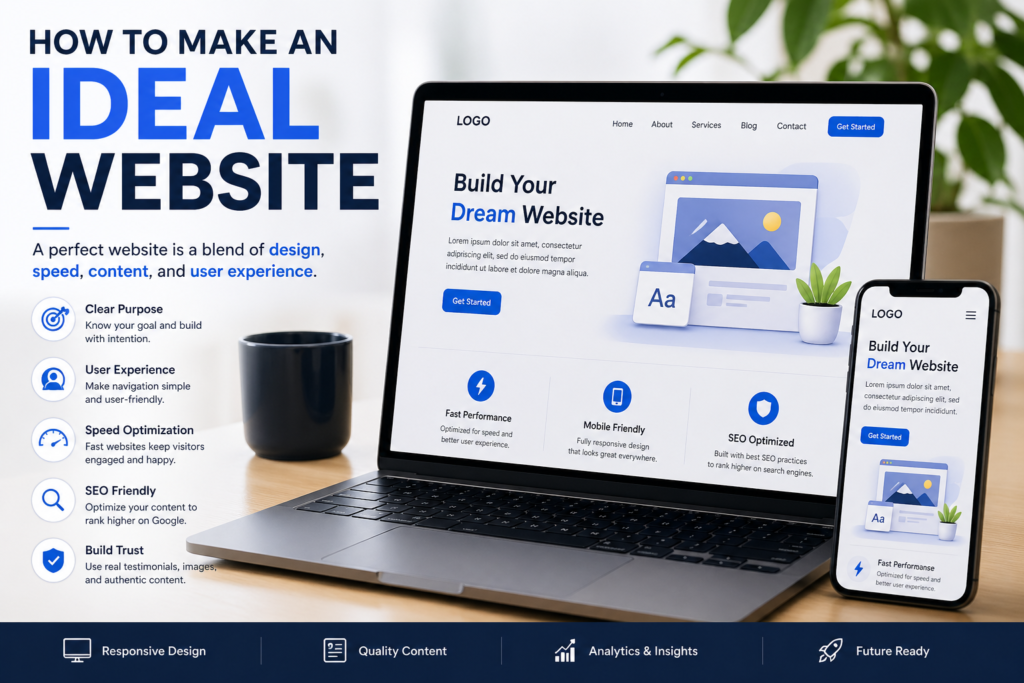
Start With Clear Purpose for an ideal website in 2026
Before choosing colors or layouts, define the goal of your website. Is it to showcase a portfolio, sell products, generate leads, or build a personal brand? A focused purpose helps you design every element with intention. Websites that try to do everything often end up doing nothing effectively.
Choose a Clean and Modern Design for Your Website
First impressions matter. When someone lands on your website, it takes seconds to form an opinion. A clean layout, balanced spacing, and consistent fonts create a professional look. Avoid clutter. Minimalism isn’t just a trend—it improves readability and keeps users engaged.
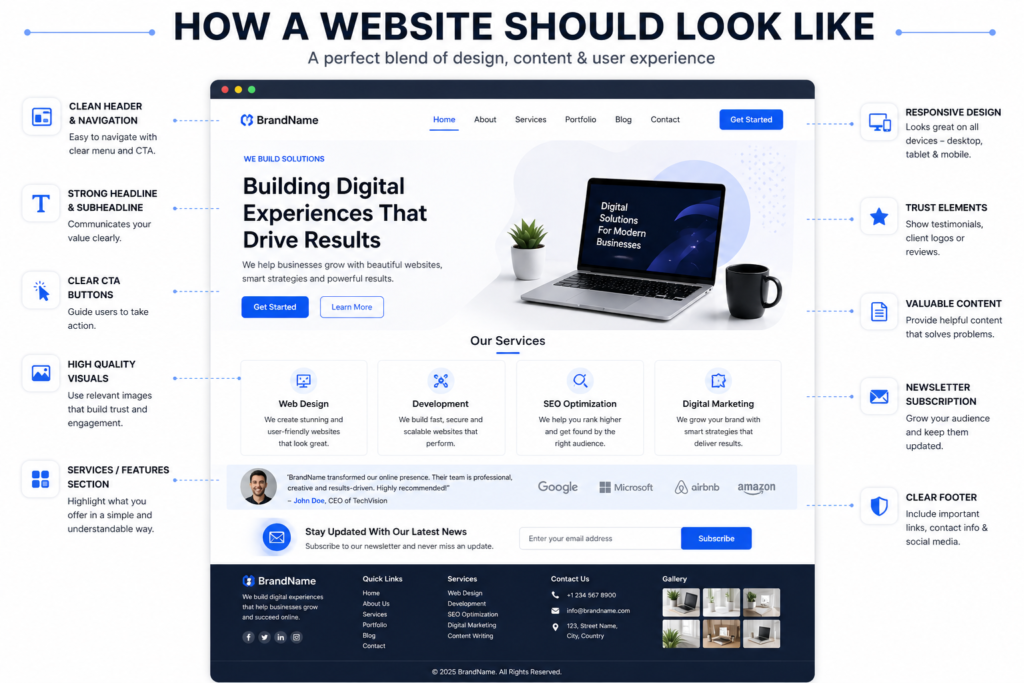
Optimize for Mobile First in 2026
Most users today browse through their phones. If your website doesn’t perform smoothly on mobile, you’re already losing traffic. Ensure your design is responsive, fast-loading, and easy to navigate on smaller screens. In 2026, mobile-first design is not optional—it’s the standard.
Focus on User Experience (UX)- the main driver of ideal website
An ideal website is easy to navigate. Visitors should find what they’re looking for within seconds. Use clear menus, simple navigation bars, and strategic call-to-action buttons like “Contact,” “Shop,” or “Get Started.” The smoother the journey, the higher the chances of conversion.
Speed is Everything- an ideal website can’t be slow
Slow websites kill engagement. Optimize images, use reliable hosting, and keep your design lightweight. Even a delay of a few seconds can increase bounce rates significantly. Fast-loading websites not only improve user experience but also rank better on Google Search.
Create Valuable Content
Content is still king. Whether it’s blog posts, service pages, or landing pages, your content should solve problems or provide value. Focus on clarity, not fluff. Speak directly to your audience’s needs and keep your tone authentic.
SEO is Your Growth Engine
Search Engine Optimization helps your website get discovered organically. Use relevant keywords, optimize headings, and write clear meta descriptions. Over time, good SEO can bring consistent traffic without spending on ads.
Build Trust Through Authenticity
People connect with people, not just websites. Add an “About Me” section, testimonials, and real images if possible. Trust signals like reviews, client logos, or certifications can make a huge difference in converting visitors into customers.
Integrate Smart Tools
Modern websites in 2026 leverage tools for better performance—analytics, chatbots, and email integrations. Platforms like Google Analytics help you understand visitor behavior and improve your strategy continuously.
Keep It Scalable
Your website should grow with you. Choose platforms and structures that allow easy updates, new pages, and future expansion. Think long-term, not just launch.
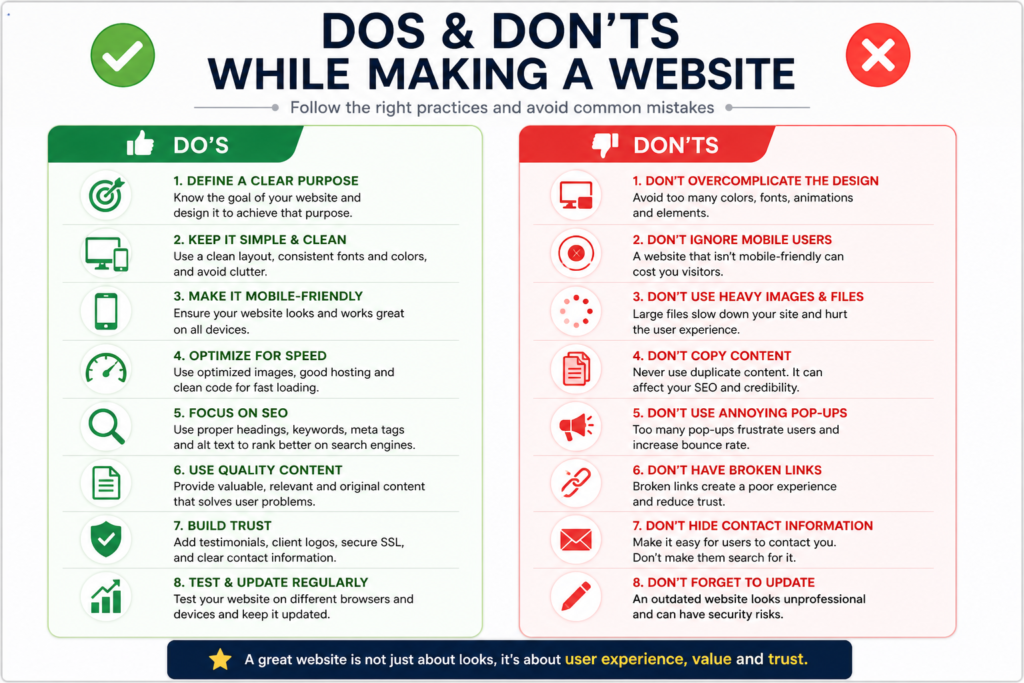
An Ideal Website isn’t the fanciest!
At last, an ideal website is not the most complex one—it’s the most effective one. It communicates clearly, loads quickly, looks professional, and serves a purpose. If you focus on user experience, valuable content, and smart optimization, your website won’t just exist—it will perform.
In 2026, the winners aren’t those with the fanciest websites, but those with the most intentional ones. For more info connect with me on linkedin.